



For anyone struggling with thinning hair or bald spots, there’s a new trend making waves in the beauty and dermatology world, the hair tattoo, scientifically known as scalp micropigmentation (SMP). It’s being praised as a quick, non-surgical solution for people who want to restore the look of fuller hair without undergoing expensive or painful procedures.
What Exactly Is Scalp Micropigmentation (SMP)?
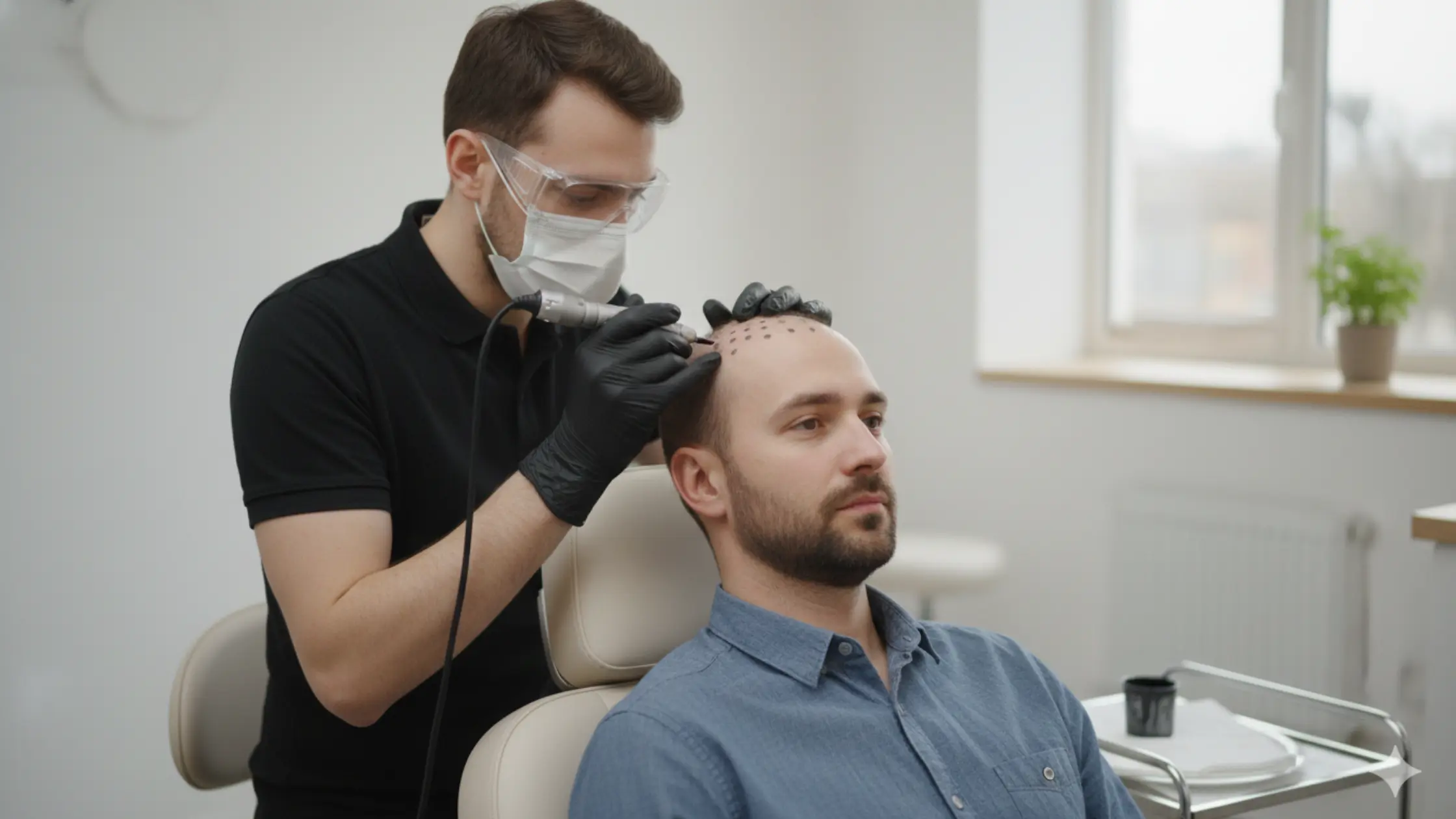
SMP is a non-surgical cosmetic procedure that uses tiny micro-needles to deposit pigment into the scalp. The result mimics the look of natural hair follicles, creating the illusion of a fuller, denser scalp without the need for transplants or medication.
Dr. Mandeep Singh, Head of Plastic, Dermatology & Cosmetic Surgery at Paras Health, Gurugram, explains that SMP can help camouflage bald spots and recreate a natural-looking hairline. “Scalp micropigmentation helps hide thinning areas and give the illusion of a fuller scalp,” he says. “It’s ideal for those who want visible results without surgery.”
Dr. Neha Sharma, a trichologist based in Delhi, says SMP is a great option for people seeking an aesthetic fix. “It can be a game-changer for confidence,” she explains. “But you must choose an experienced SMP practitioner. Always check before-and-after photos, reviews, and pigment safety. The pigment shade, pattern, and precision all matter. A poor job can make the results look patchy or unnatural.”
The procedure itself is relatively painless, though mild redness or sensitivity can occur for a day or two. Aftercare involves keeping the scalp clean, avoiding direct sunlight for a few days, and moisturizing regularly once the skin heals.
How It Differs From A Regular Tattoo?
Although it’s often called a hair tattoo, the technique is quite different from traditional tattooing.
- The needles are ultra-fine, smaller than those used in body tattoos.
- The pigment is specially designed to mimic real hair shades and fade naturally over time.
- It’s applied only to the upper dermal layer, unlike tattoos which go deeper.
This ensures the results look realistic, soft, and natural, without that harsh inked look.
Pros of Scalp Micropigmentation
One of the biggest reasons Scalp micropigmentation is gaining popularity is its simplicity. The results are immediate, there’s no downtime, and maintenance is minimal. The treatment works well for men and women of all hair types, including those dealing with alopecia or post-surgical scars.
- Instant Results: You can walk out of the clinic with the appearance of a full head of closely-shaved hair or denser coverage, no waiting for months like other treatments.
- Low Maintenance: No daily routines, serums, or pills. Once healed, SMP just needs mild care and occasional touch-ups.
- Cost-Effective: Compared to hair transplants, SMP is relatively affordable and gives long-lasting results.
- Suitable for All Hair Types: It works for men and women of all skin tones and hair types; especially those with diffuse thinning, alopecia, or post-transplant scarring.
- No Surgery, No Downtime: It’s minimally invasive, with very little pain and almost no recovery period.
Cons of Scalp Micropigmentation
Still, it’s important to understand what scalp can and cannot do. It doesn’t stimulate hair growth, it only creates the appearance of it. The pigments may fade slightly over time, requiring touch-ups every few years. It’s also best suited for short or buzzed hairstyles; those with longer hair may need customized blending for natural results.
- It’s Cosmetic, Not Curative: SMP doesn’t grow new hair. It’s purely aesthetic.
- Fading Over Time: Pigments fade gradually and require touch-ups every 2–5 years to maintain color consistency.
- Not Always Ideal for Long Hair: SMP works best for buzzed or closely-shaved looks. Those with long hair may need a different approach to ensure a natural blend.
- Risk of Mismatch: If done by an untrained technician, pigment mismatch or uneven blending can look unnatural.
- Possible Allergic Reactions or Infection: Like any cosmetic procedure, hygiene and pigment quality are crucial.
So, Is Hair Tattoo Worth It?
For people who don’t want to undergo surgery, take medications long-term, or wait months for transplants to show results, scalp micropigmentation offers a practical, confidence-boosting alternative. It’s not a cure for baldness, but it can transform how you feel about your reflection.
But if your goal is actual regrowth, you’ll need to explore medical treatments like minoxidil, finasteride, PRP therapy, or even hair transplants alongside professional guidance.
As Dr. Singh puts it, “SMP doesn’t give you hair, it gives you back confidence.”
Disclaimer: This article is for informational purposes only and is not intended as medical advice. Scalp micropigmentation (SMP) is a cosmetic procedure, and results may vary from person to person. Always consult a certified dermatologist or licensed SMP practitioner before undergoing any treatment. ControlHairfall does not endorse or promote any specific clinic, practitioner, or product mentioned in this article.