


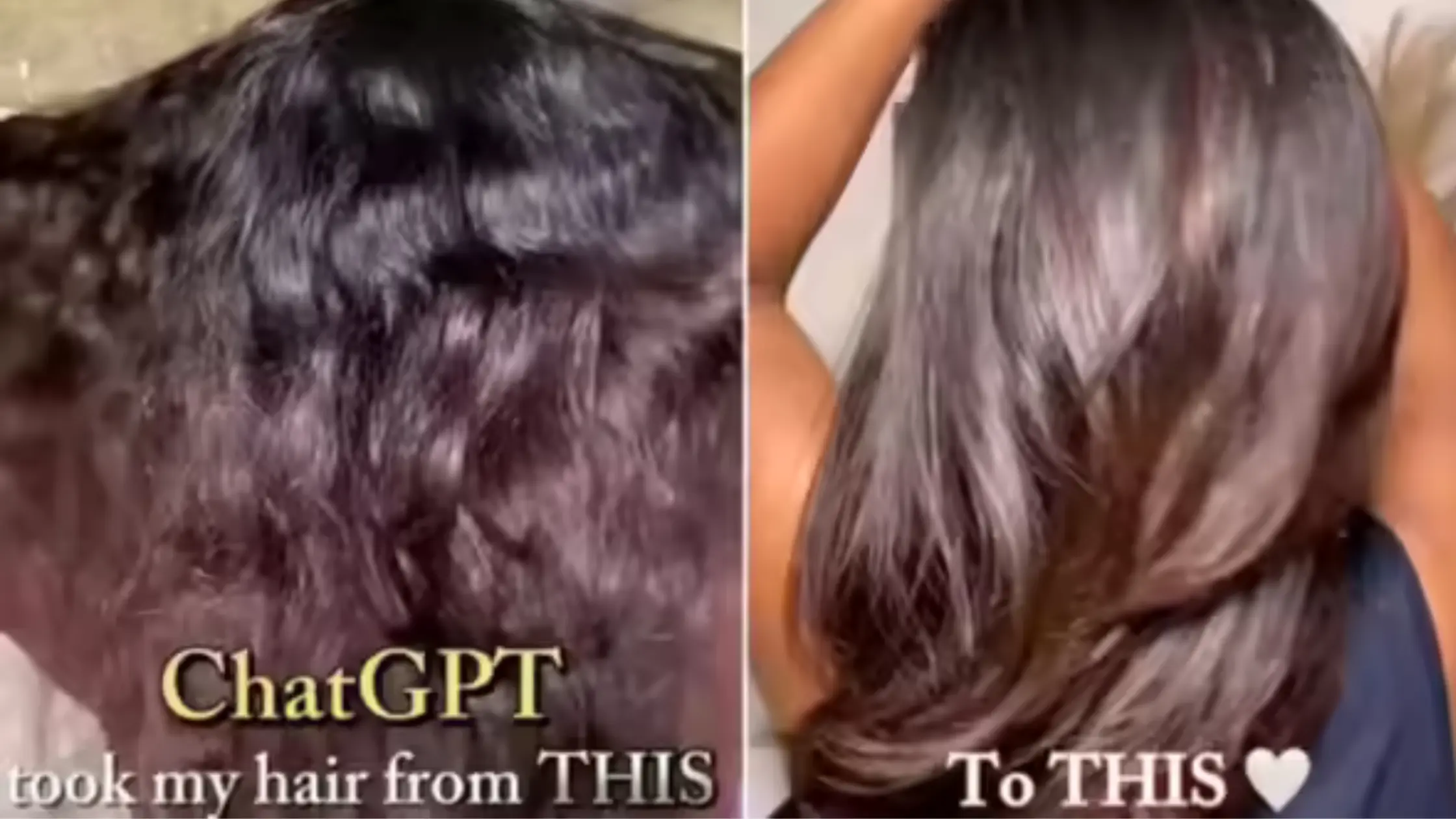
What if you could hand over your hair problems to ChatGPT and wake up with softer, shinier locks a month later? That’s exactly what beauty creator Devika Vohra did when she asked ChatGPT to create a custom hair care routine for her dull, frizzy strands. Thirty days later, she says her hair looked like it had been through a professional makeover without stepping into a salon.
Her viral transformation has everyone asking the same question: Can ChatGPT actually fix your hair?
As someone who lives and breathes hair care science, I had to dig deeper and honestly, the AI powered routine wasn’t as random as you might think. In fact, it followed several principles I often recommend for reviving tired, damaged hair. Let’s break it down.
The Viral AI Hair Routine By ChatGPT
For her dry, frizzy hair, ChatGPT suggested a minimal yet effective four-step plan:
- Oil once or twice a week
- Wash with a gentle, sulfate-free shampoo
- Deep condition weekly
- Avoid heat styling
These steps align perfectly with what actually works for dry, frizzy, or damaged hair. The goal is to restore moisture balance, protect the cuticle, and prevent further breakage, something most people skip in their rush to try new products.
Ingredients That Made A Difference
The AI’s ingredient suggestions were surprisingly accurate:
- Use coconut, argan, and almond oils for nourishment
- Hydrate with aloe vera and honey
- Avoid sulfates, parabens, and drying alcohols
Plant-based oils are naturally rich in fatty acids that help replenish the scalp’s lipid barrier, while humectants like aloe vera attract and lock in moisture. This combination keeps the strands soft, hydrated, and frizz-free.
DIY Hair Masks That Actually Help
Among its DIY suggestions were simple kitchen blends like banana and honey or egg and curd masks. These work because banana and honey deeply hydrate while eggs add protein to strengthen the strands.
To make them more effective, always apply a DIY mask on damp hair, cover it with a warm towel for 20–30 minutes, and rinse with cool water to seal the cuticle. However, remember that DIY masks are great for a quick boost, they don’t replace deep-conditioning treatments formulated with smaller molecules that penetrate deeper into the hair shaft.
Habit Tweaks That Changed Everything
The ChatGPT’s Hair Care Routine for Devika didn’t just stop at products it recommended small but powerful lifestyle shifts:
- Replace rough towel-drying with a soft cotton T-shirt
- Sleep on a silk pillowcase
- Trim split ends every 6–8 weeks
These habits may seem simple but make a huge difference over time. Friction and heat are silent culprits behind dull, frizzy hair. Reducing them can visibly improve your hair’s health and shine.
The 30-Day Hair Reset Plan By ChatGPT
The structured 30-day routine included weekly scalp massages, gentle oiling, clarifying washes, and deep conditioning. It’s essentially a “reset” period for your hair, something I often recommend before starting any new treatment or routine.
Consistency is the real game-changer here. Even the most luxurious products won’t work if your routine isn’t regular or balanced.
Over To You
AI can definitely be a helpful tool for building or refining your hair care routine, especially when you’re unsure where to start. But remember your hair’s needs are unique. Use AI as a guide, not a substitute for understanding your scalp and hair health.
If you’re struggling with persistent hair fall, dandruff, or scalp irritation, it’s best to get a professional diagnosis before following any one-size-fits-all plan.
Disclaimer: The information in this article is for educational and informational purposes only. While the routine mentioned was generated by AI and followed by the creator, results may vary based on individual hair type, scalp condition, and overall health. Always perform a patch test before trying new products or DIY masks, and consult a trichologist or dermatologist for personalized advice.