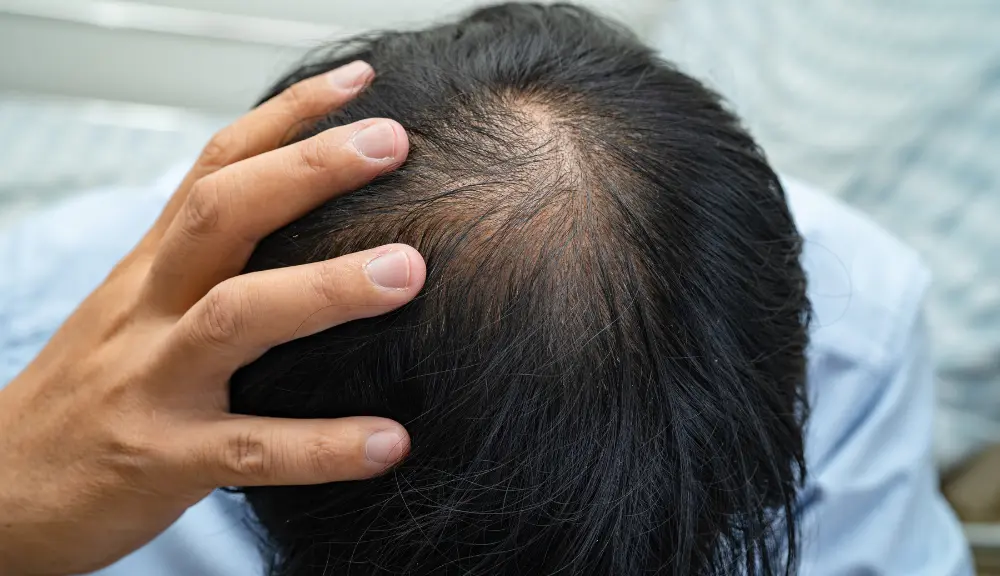




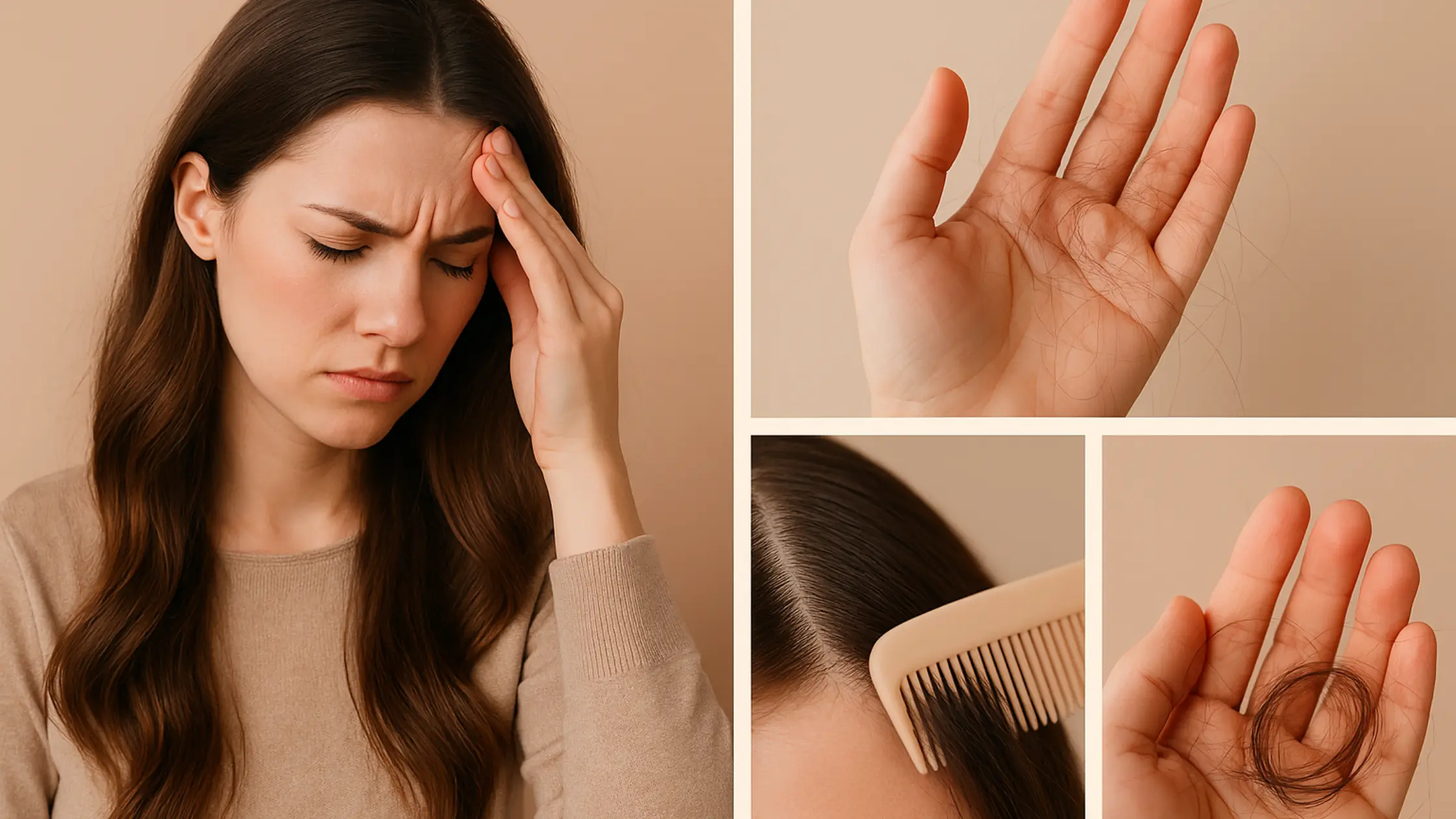
If you’ve ever noticed sudden shedding right after a stressful week, a fight, an illness, or an emotional shock, you’re not imagining it. A new study published in the journal Cell has revealed a surprising truth: stress can trigger your own body to attack your hair follicles.
The connection between stress and hair fall is much deeper than we initially thought. This research shows a biological pathway explaining exactly why stress causes hair fall, and it’s more dramatic than we thought.
What The New Study On Stress And Hair Fall Actually Say?
Researchers discovered that when we are under intense, acute stress, our sympathetic nervous system becomes hyperactivated. In simple terms our nerves go into overdrive.
This hyperactivation releases signals around the hair follicle that:
- disrupt its growth cycle
- increase inflammation
- and in some cases, invite the immune system to attack the follicle itself.
For the first time, scientists found a clear mechanism showing how stress can biologically damage our hair follicles not just temporarily, but in ways that may lead to more serious hair-loss conditions. The study gives scientific backing to something millions of people experience sudden or unexplained hair fall during stressful times.
How Stress Damages Hair Follicles?
Stress activates the sympathetic nerves all over our body. Around the hair follicle, this activation becomes unusually intense. This triggers chemical messengers that disrupt the normal cycle of the hair follicle.
They can enter the shedding (telogen) phase early. This is why we may suddenly lose more than 100 hair a day during stressful periods.
The study found that stress-triggered nerve activity can cause immune cells to start attacking hair follicles, similar to what happens in conditions like alopecia areata. This explains why some people experience sudden bald patches or diffuse shedding after a traumatic event.
Signs Your Hair Fall Might Be Stress-Related
We’ve always known stress plays a role, but this research shows how it happens. Hair shedding may be linked to stress if you notice:
- a sudden spike in daily hair fall
- shedding all over the scalp (not in patches)
- hair loss starting a few days to a few weeks after a stressful event
- more hair coming out during combing or showering
- thinner ponytail
- scalp sensitivity or tingling
- sleep disruptions and hair fall happening together
- anxiety flare-ups followed by shedding
If you’re ticking many of these boxes, stress may be the missing factor behind your hair fall.
What You Can Do To Reduce Stress-Related Hair Fall?
You cannot eliminate stress from life but you can reduce how your body reacts to it. Since the study shows the issue starts in the nervous system, the goal is to calm that overactivation.
Practice Nervous-System Calming Techniques
For calming our nervous system so it doesn’t attack our hair, try:
- slow breathing (inhale 4 seconds, exhale 6)
- meditation or grounding
- guided relaxation
- yoga nidra
- progressive muscle relaxation
- pranayam.
Fix The Sleep Routine
We all know how cranky we feel, when we don’t sleep well. It triggers our nervous system which can in turn lead to stress induced hair fall. So always aim for 7–8 hours and reduce screens 1 hour before bed.
Change Your Diet
When dealing with hair fall, the first change anyone should ever make should be to alter their diet. Eat foods that nourish and strengthen your hair and in this case, your hair fall control diet should definitely include ingredients that has a calming effect on your mind.
To support hair from inside, include:
- omega-3
- B vitamins
- iron (if your levels are low)
- magnesium
- ginseng
- natural DHT blocking ingredients and
- protein-rich meals
- Ashwagandha and tulsi are known to help regulate stress hormones.
Always consult your doctor if you have health conditions or take medication.
Reduce Physical Stress On Your Hair
While your body is already attacking your hair follicles, you need to be extra gentle and patient with it. Avoid or atleast minimize:
- tight hairstyles
- hair products with harsh chemicals
- frequent heat styling
- chemical treatments like botox, hair smooothening, coloring, silk press and others.
Create A Calming Scalp Routine
Your scalp is the foundation on which your hair follicles flourish, so nurture it with a calming routine. Try warm oil scalp massage, nourishing scalp serums, gentle exfoliation or scalp facials. Try do do atleast one thing that would promote your scalp health.
When Should You Consult A Specialist?
You should seek help of a professional, if:
- your seasonal shedding is severe for more than 8–12 weeks
- you see bald patches
- hair fall is affecting your eyebrows or body hair
- you have scalp pain, redness, or inflammation
- you suspect autoimmune hair loss
- you have rapid thinning along the part line
A professional can help identify whether it’s stress-related hair fall, hormonal imbalance, or something else.
Over To You
The new study finally confirms what many of us feel, stress causes hair fall, not just emotionally but biologically. When our nerves go into overdrive, our hair follicles become vulnerable and in some cases, our immune system may even attack them.
The good news?
This process can be interrupted. With the right stress-management habits and a gentle hair-care routine, most stress-related hair fall can be reduced and possibly reversed.
Disclaimer: This article is for informational purposes only and is not a substitute for professional medical advice, diagnosis, or treatment. Always consult a qualified healthcare provider or dermatologist if you are experiencing severe or persistent hair fall or have concerns about your health.